Best Fittings BSA R10 and R12 CLX Extra Capacity Carbon Fibre Buddy Bottle

£120.00

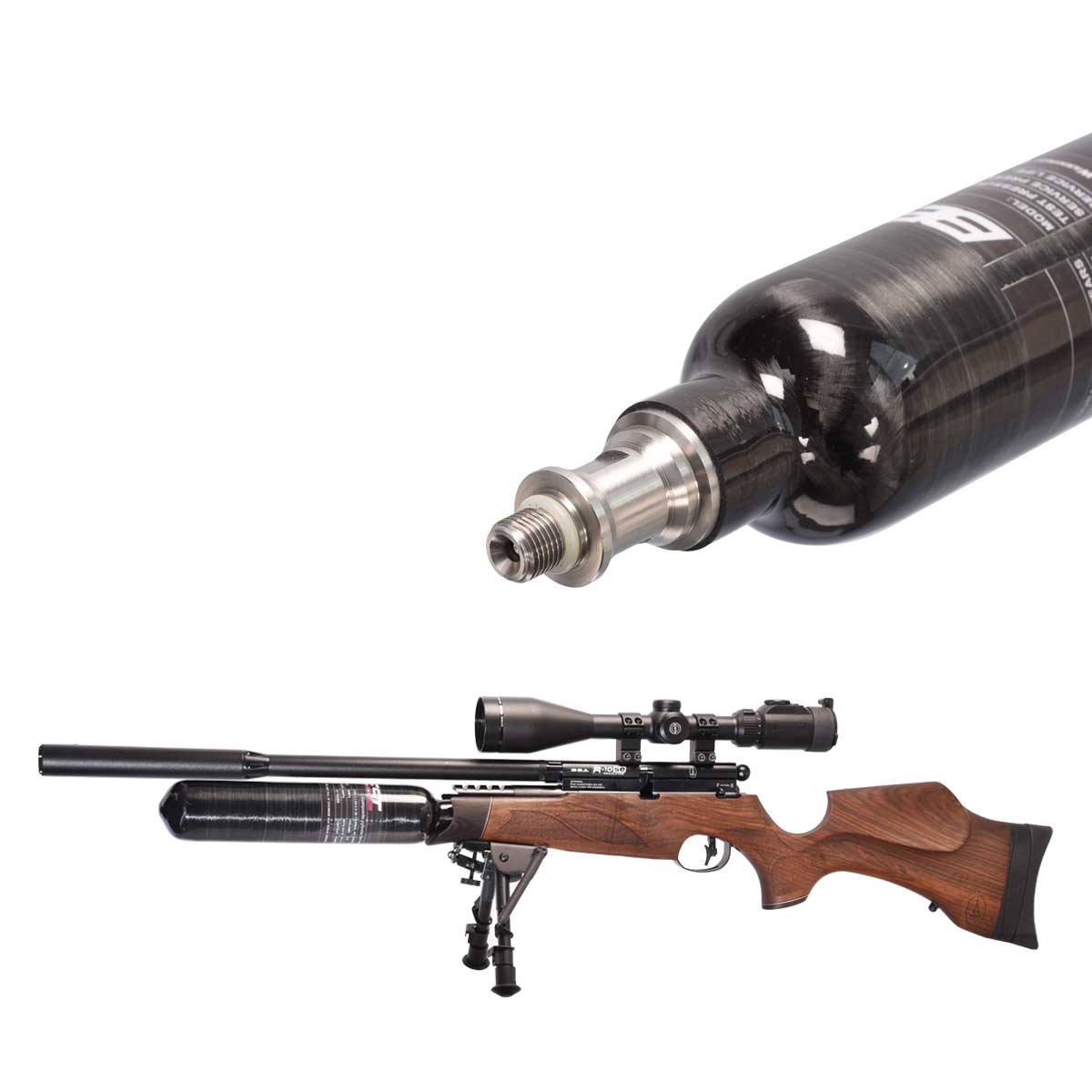
The BSA R10 and R12 CLX Extra Capacity Carbon Fibre Buddy Bottle is configured for the BSA R10 and the BSA R12 CLX.

Fitted with a Completely New Best Fittings Custom Designed and Built Valve, the bottles are moved forward just enough to clear any obstructions within the tight space available.

BSA R10 and R12 CLX Extra Capacity Carbon Fibre Buddy Bottle 300cc Specifications:

  • Neck Thread –  M18 x 1.5
  • WP (Working Pressure) – 300 BAR
  • TP (Test Pressure) – 450 BAR
  • Length including valve – 280mm
  • Diameter – 54mm+/-1.5mm
  • Weight – 590g


BSA R10 and R12 CLX Extra Capacity Carbon Fibre Buddy Bottle 500cc Specifications:

  • Neck Thread –  M18 x 1.5
  • WP (Working Pressure) – 300 BAR
  • TP (Test Pressure) – 450 BAR
  • Length including valve – 330mm
  • Diameter – 61mm+/-1.5mm
  • Weight – 790g


Design Life – 15 Years
15 Year Design Life is typical of the vast majority of composite cylinders available for use in the UK/EU.

5 Year cylinder hydro-static test cycle from date of manufacture. Only required if you are having the bottle commercially re-filled.

Cylinder Decommission Date:
15 Years from Manufacture Date detailed on the cylinder.
Decommission date refers to the last date that the cylinder can be filled at a commercial fill station. You can safely continue to use the cylinder after this date until the air is depleted, it just cannot be commercially re-filled.

As we send this item with Parcelforce, it will be sent empty of air. If you wish for it to be sent full, we can offer home delivery for £20.00. Please contact us if you wish us to deliver a full bottle.

IMPORTANT NOTE
Our cylinders are CE marked and are type approved for use in the UK and European Union.

Reviews

There are no reviews yet.

Be the first to review “Best Fittings BSA R10 and R12 CLX Extra Capacity Carbon Fibre Buddy Bottle”

Related Products

FAQ

  • Spring-piston (Springers/Break-barrel or Underlever): Cock by compressing a spring; reliable, no external air needed, but have recoil.
  • PCP (Pre-Charged Pneumatic): Use a high-pressure air tank; very accurate, low recoil, multi-shot magazines common. Requires a pump, compressor, or tank refills.
  • Multi-pump Pneumatic: Pump to build pressure; versatile power control.
  • CO2-powered: Use disposable cartridges; good for pistols or semi-auto, but power drops in cold weather.

Beginner recommendation: Start with a .177 or .22 caliber break-barrel for simplicity.

  • .177: Faster, flatter trajectory, great for target shooting and small pests (birds, squirrels). Higher pellet count per weight.
  • .22: More knockdown power for rabbits, larger pests, or small game hunting.
  • Larger (.25+): For bigger game or maximum power, but heavier recoil and fewer shots per fill.

Treat every airgun as if it were loaded. Core rules (same as firearms):

  • Always keep the muzzle pointed in a safe direction.
  • Keep your finger off the trigger until ready to shoot.
  • Know your target and what is beyond it (pellets can ricochet or travel far).
  • Wear eye protection.
  • Store unloaded and secured, away from children.

Airguns can cause serious injury or death at close range. Follow local laws on discharge (e.g., not across public ways in many places).

Laws vary hugely—always check your local jurisdiction:

  • USA: Often treated more leniently than firearms, but some states (e.g., NJ) classify them as firearms requiring permits. Hunting regulations differ by state; check for caliber/season rules.
  • UK: Power limits (e.g., 12 ft-lbs for rifles without FAC). Registration or certificates may apply.
  • Canada: Limits around 500 fps / 5.7 joules before firearm classification.
  • Australia: Generally treated as firearms; licensing and registration required in most states.
  • EU countries: Varies (e.g., Belgium allows over 18 with limits; Germany has 7.5 joule restrictions). France free up to ~20 joules.
  • Japan/Singapore: Very strict; licensing, inspections, or near bans.

Transporting across borders is complex—research customs, use European Firearms Passports where applicable, and never assume airguns are exempt.


Buy from reputable dealers (e.g., Pyramyd Air, local shops). Check warranties. Common beginner issues: Accuracy problems (scope mounting, pellet choice, technique), cocking difficulties on break-barrels, or power inconsistency.

Additional Tips:

  • Use proper pellets (not just BBs) for accuracy.
  • Practice breathing, trigger squeeze, and follow-through.
  • Join clubs or forums like Airgun Nation for advice.

Depends on country/power level. Many places allow low-power airguns without permits for adults, but higher-powered ones often require licensing similar to firearms. Minors usually need adult supervision.

Common for pest control (rats, squirrels, birds) and small game (rabbits). Check local hunting regs—e.g., specific seasons, calibers (.22+ often preferred for ethical kills), and licenses required. Humanely dispatch with head/heart shots at appropriate ranges.


  • Entry-level: 400–800+ fps.
  • Hunting PCPs: Can exceed 1000 fps in .177, with 20–50+ ft-lbs energy.
  • Effective range: 20–50 yards for accurate pest control/hunting; precision target shooting can go farther. Power drops with distance; always prioritize accuracy over max velocity.


  • Budget pest control: Gamo Swarm, Benjamin/Crosman break-barrels, Umarex models.
  • Hunting: Benjamin Marauder, FX Impact/DRS, Air Venturi Avenger (PCP), or quality springers like Weihrauch HW or Diana.
  • Quiet/urban: Look for suppressed or quieter models (many PCPs excel here).


  • Clean barrel regularly (use pellets, not BBs in rifled barrels).
  • For PCPs: Monitor air pressure; don’t overfill.
  • Springers: Break-in period (100–250 shots); avoid dry-firing.
  • Store in a cool, dry place. For PCPs, opinions vary on leaving pressurized (many recommend partial pressure).

Customer Reviews